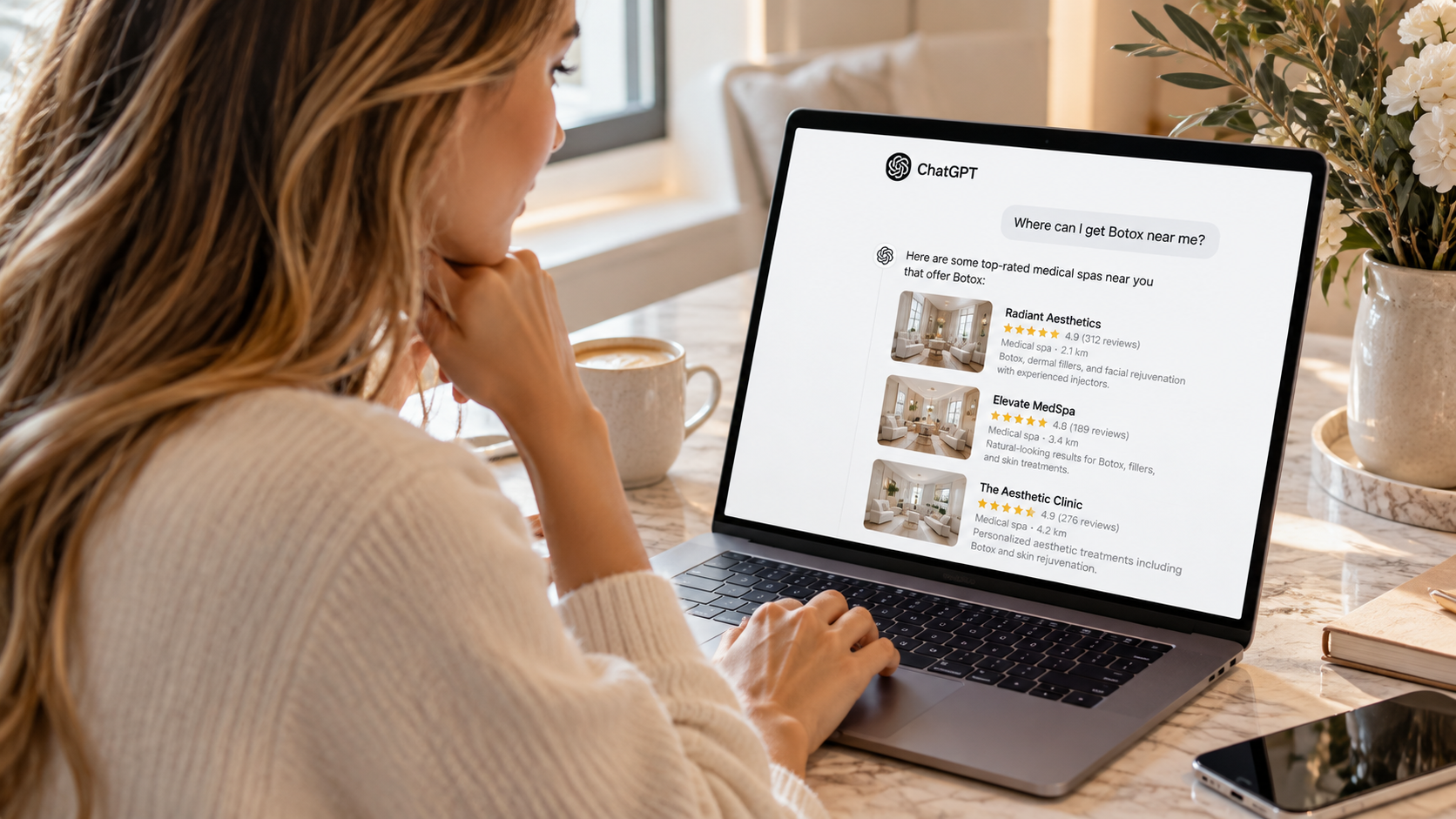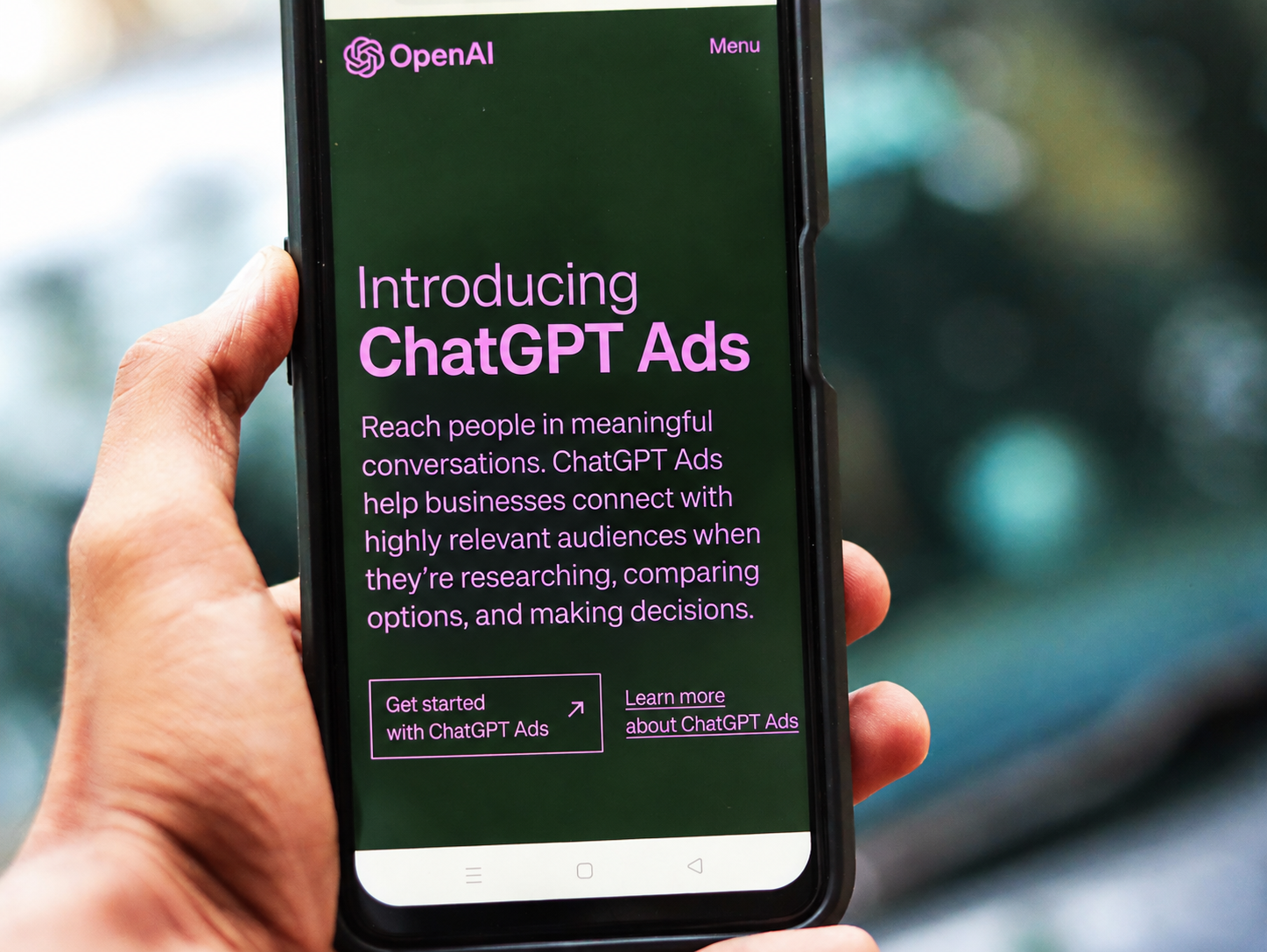
ChatGPT advertising is creating a new opportunity for businesses to reach potential customers while they're researching products, comparing services, and making decisions.
For healthcare practices, though, there's an important question to answer before investing in another advertising platform: are you actually eligible to advertise?
At Healing Path, we've been testing ChatGPT Ads for our own businesses. We've worked through the account verification process, created campaigns, developed advertising creative, configured targeting, and implemented conversion tracking.
We haven't yet launched a patient-facing ChatGPT campaign for a healthcare client, and we don't want to suggest otherwise. However, our experience with the platform, combined with nearly two decades of healthcare marketing experience, gives us a useful perspective on where this opportunity may fit.
In this guide, we'll explain how ChatGPT advertising works, what healthcare practices need to know about eligibility, and what's involved in setting up a campaign.
What Are ChatGPT Ads?
ChatGPT Ads are paid advertisements displayed within ChatGPT's interface. Unlike traditional search advertising, which primarily responds to specific search terms, ChatGPT can consider the broader context of a conversation when determining which advertisements may be relevant.
For example, someone researching business software, comparing local services, or planning a purchase may see a relevant sponsored advertisement alongside their conversation.
Advertisements are clearly labelled and displayed separately from ChatGPT's answers. Paying for an advertisement does not influence ChatGPT's organic recommendations.
This distinction is important. ChatGPT advertising is not the same as improving your business's visibility in AI-generated answers. Those are separate marketing opportunities that require different strategies.
ChatGPT Ads are currently shown to eligible users on ad-supported plans, rather than all ChatGPT users.
Can Chiropractors Advertise on ChatGPT?
This is one of the questions we're most interested in answering.
OpenAI permits certain healthcare advertising categories in the United States, with approvals reviewed manually on a case-by-case basis. However, chiropractic services are not specifically named among the currently eligible categories.
That doesn't necessarily mean chiropractic advertising will never be permitted. It does mean that we cannot currently confirm that a chiropractic practice will be approved.
Chiropractic is a licensed and regulated healthcare profession, and OpenAI does permit certain regulated healthcare categories under specific conditions. We believe this provides a reasonable basis to investigate whether appropriately licensed chiropractic practices could qualify for consideration.
However, that's an interpretation of the current eligibility framework, not a confirmed approval pathway.
For chiropractors interested in testing ChatGPT advertising, the first step would be establishing eligibility and submitting appropriate advertising materials for review.
Until a chiropractic campaign has been approved, we would consider this an experimental opportunity rather than an established advertising channel.
Can Medical Aesthetics Clinics Advertise on ChatGPT?
Yes, with conditions. Medical aesthetics is one of the healthcare areas where OpenAI identifies an eligible advertising category in the United States, specifically minimally invasive cosmetic procedures.
This creates potential opportunities for qualified medical spas and aesthetics clinics, but eligibility does not guarantee approval. The advertiser, individual treatments, advertising creative, and landing pages must meet OpenAI's applicable requirements. Additional verification, including proof of professional licensure, may also be required.
For medical aesthetics practices, the first step is confirming that the specific services being promoted qualify under the current policies.
How to Advertise on ChatGPT: The Setup Process
For businesses that are eligible, ChatGPT advertising is managed through OpenAI's Ads Manager.
The setup process will feel somewhat familiar to anyone who has used Google Ads or Meta Ads, although there are important differences in how campaigns are structured and how relevance is determined.
Step 1: Create an Advertiser Account and Verify Your Business
The first step is creating an account through OpenAI Ads Manager.
You'll need to provide business information, including your legal business name and advertising brand name. You'll also need to configure your billing details, payment method, and account settings.
Business verification is part of the onboarding process, and additional review may apply to regulated industries.
For healthcare practices, we'd recommend ensuring that the legal business information, professional licensing, website details, and services being advertised are consistent.
It's also important to understand that creating an advertising account does not automatically mean your advertisements are approved.
Step 2: Choose Your Campaign Objective
Once your account is ready, you'll create a campaign and select an advertising objective.
ChatGPT Ads supports objectives related to reaching users, generating website traffic, and optimizing toward supported conversion events.
The appropriate objective depends on what you're trying to accomplish.
For a healthcare practice, generating website visits might be useful during an initial test. However, if your ultimate goal is new patient appointments, you'll want to measure more than clicks.
We generally recommend thinking about the entire conversion process before launching a campaign: where someone will land, what action you want them to take, and how you'll know whether the advertising produced a meaningful inquiry.
Step 3: Set Your Advertising Budget
One of the advantages of the self-serve ChatGPT Ads platform is that businesses can begin testing without the large advertising commitments associated with earlier stages of the platform's rollout.
The current minimum daily campaign budget is $25 USD for accounts billed in US dollars.
That works out to approximately $175 over seven days at the minimum average daily budget.
Importantly, OpenAI treats daily budgets as an average over a seven-day period. Spending may vary from one day to another within the platform's stated limits.
The minimum budget makes an initial test relatively accessible, but it doesn't guarantee enough traffic to draw meaningful conclusions.
For healthcare practices, we'd rather begin with a controlled test and evaluate the results than recommend a large budget before understanding how the platform performs.
Step 4: Configure Your Geographic Targeting
Geographic targeting is particularly important for local healthcare practices.
A chiropractic clinic serving patients in one city doesn't benefit from paying for clicks from people across the country.
During campaign setup, advertisers can configure available location targeting options to better align their campaigns with the areas they serve.
In our own testing, we've found that it's important to review these settings carefully rather than relying on the platform's initial defaults.
We also recommend checking website analytics after launch to understand where traffic is actually coming from.
For local clinics, geographic relevance can be just as important as the relevance of the advertising message itself.
Step 5: Create Ad Groups and Add Context Hints
This is one of the more interesting differences between ChatGPT Ads and traditional search advertising.
Rather than building campaigns exclusively around exact search keywords, advertisers can provide context hints.
These are descriptions that help ChatGPT understand the situations in which an advertisement might be relevant.
For example, a business might describe its services, the customers it serves, and the kinds of decisions that typically lead someone to consider those services.
Context hints are not exact-match keywords, and they do not guarantee that an advertisement will appear alongside a particular conversation.
They help inform the platform's relevance matching.
For healthcare practices, this is another reason why the wording of an advertisement, its landing page, and its supporting context need to be carefully considered.
Step 6: Write Your Advertising Headlines and Descriptions
ChatGPT advertisements include a headline and supporting description.
The platform has character limits, so the message needs to be concise.
OpenAI currently recommends headlines of approximately 16–24 characters, with a maximum of 50 characters. Descriptions are recommended at approximately 32–48 characters, with a maximum of 100 characters.
That doesn't leave much room for vague or complicated messaging.
We recommend making it immediately clear what the business offers and why someone might find it relevant.
For healthcare advertisers, this also means avoiding unsupported medical claims, exaggerated outcomes, or language that could exploit personal health concerns.
Different messaging variations can be tested to understand which approaches generate relevant engagement.
Step 7: Prepare Your Advertising Images
ChatGPT Ads also requires visual creative.
Depending on the available advertising format, businesses may be able to use a single image or a multi-image presentation.
In our own experience using Ads Manager, we've encountered formats that use one image and others that allow up to four images.
That gives businesses an opportunity to showcase their brand, location, services, or other relevant visuals.
For a healthcare practice, we'd generally consider images such as the clinic environment, genuine staff photography, or appropriate service-related imagery.
However, healthcare advertising images need additional consideration. An image that's acceptable on one advertising platform isn't necessarily permitted on another.
Before submitting creative, we'd review both the image and its relationship to the advertising message and landing page.
Step 8: Choose a Relevant Landing Page
An advertisement is only one part of the patient acquisition process.
When someone clicks, they need to arrive at a page that clearly explains the service and provides an appropriate next step.
That might be a dedicated service page, an educational landing page, or a consultation booking page.
We wouldn't automatically send every visitor to a clinic's homepage.
The best destination depends on the advertising message and the action we want the visitor to take.
For healthcare practices, the landing page also needs to comply with relevant advertising policies and accurately represent the services being promoted.
Step 9: Install Conversion Tracking
One of the most important steps is making sure you can measure what happens after someone clicks.
ChatGPT Ads supports conversion measurement through its advertising pixel and supported conversion events.
This can help businesses understand whether advertising traffic leads to meaningful actions on their website.
For a healthcare practice, those actions might include submitting an appointment request, completing a contact form, or reaching a confirmed booking page.
Tracking page views alone isn't enough to evaluate patient acquisition.
We also recommend using UTM parameters and website analytics to compare ChatGPT advertising with other marketing channels.
In our own testing, we've seen why this matters. Website traffic and advertising engagement don't automatically translate into qualified business inquiries.
The goal is to understand whether a campaign is producing useful results, not simply whether people are clicking.
Step 10: Submit Your Ads for Review and Monitor Performance
Once your campaign is configured, your advertisements must pass the applicable review process before they can run.
Approval is particularly important for healthcare-related advertising, where restrictions may apply to the advertiser, the services being promoted, and the content of the advertisement.
Once campaigns are active, advertisers can monitor metrics including impressions, clicks, click-through rate, advertising spend, and supported conversions.
We recommend reviewing performance regularly, particularly during an initial test.
That includes evaluating the quality of website traffic, reviewing geographic targeting, checking conversion tracking, and identifying which messages appear to be generating meaningful interest.
ChatGPT Ads vs. Google Ads and Meta Ads: What's Different?
We don't see ChatGPT advertising as a replacement for established healthcare marketing channels.
Google Ads remains valuable for reaching people actively searching for specific services in their area.
Meta Ads can help practices introduce services, build awareness, and reach potential patients through visual advertising.
ChatGPT introduces another type of advertising environment, where relevance can be informed by conversational context and the user's broader research process.
These channels can serve different purposes within a marketing strategy.
For a local healthcare practice, the question isn't necessarily which platform is best. It's whether adding another channel will improve the overall return on marketing investment.
What We've Learned From Testing ChatGPT Ads:
We've been experimenting with ChatGPT advertising for our own businesses, including campaign creation, geographic targeting, creative development, and conversion measurement.
One of our early observations is that generating clicks is relatively straightforward compared with generating qualified inquiries.
We've also found that campaign setup and measurement require attention, particularly when trying to understand whether traffic is coming from the intended audience.
These are early observations from our own business advertising, not results from healthcare campaigns.
We think it's important to make that distinction.
ChatGPT Ads is an emerging platform, and we're still learning where it fits best.
For healthcare practices, that uncertainty is compounded by category-specific advertising restrictions.
Is ChatGPT Advertising Worth Testing for Healthcare Practices?
We think it may be worth exploring for eligible US-based healthcare practices, provided the expectations are realistic.
Before recommending a campaign, we'd want to understand:
- Whether the practice and its services are eligible for advertising.
- Whether the campaign can be approved.
- Whether the clinic has an appropriate landing page and conversion tracking.
- Whether the available advertising budget supports a meaningful test.
- Whether the results justify continuing or expanding the campaign.
For chiropractors specifically, the eligibility question comes first.
We wouldn't recommend investing in extensive campaign development until there's greater clarity around approval.
How Healing Path Is Offering ChatGPT Ads During Beta Testing:
Because ChatGPT advertising is still developing, we're taking a measured approach to introducing it to healthcare clients.
For eligible US-based practices already purchasing other marketing services from Healing Path, we're happy to explore ChatGPT advertising as an additional service during our beta-testing period.
We're currently offering ChatGPT Ads setup and management at no additional management fee for participating clients.
Clients remain responsible for their advertising spend, and eligibility, campaign approval, and advertising results cannot be guaranteed. Additional website development, creative production, or technical implementation outside an existing service agreement may require a separate scope.
Our goal is to understand how the platform performs for different healthcare businesses before recommending it as an established part of their marketing strategy.
For chiropractic practices, that may begin with exploring eligibility rather than immediately launching advertisements.
Frequently Asked Questions About ChatGPT Ads for Healthcare:
1. Can chiropractors advertise on ChatGPT?
Chiropractic is not explicitly identified in the current eligible healthcare advertising categories. We believe it's worth exploring whether licensed chiropractic practices may qualify, but approval is not confirmed.
2. Can medical spas advertise on ChatGPT?
Certain minimally invasive cosmetic procedures are included in OpenAI's eligible US healthcare advertising categories, subject to applicable restrictions and review.
3. How much does ChatGPT advertising cost?
For US-dollar accounts, the current minimum daily campaign budget is $25 USD. Actual advertising costs depend on the campaign objective, bidding, competition, and delivery.
4. Do ChatGPT Ads require images?
Yes. Standard ChatGPT advertisements include an image asset. Some available formats also support multiple images.
5. Can ChatGPT Ads target a specific city?
The platform supports geographic targeting controls, including more localized US targeting options. Available settings should be reviewed during campaign creation.
6. Do ChatGPT Ads influence ChatGPT's recommendations?
No. Paid advertisements are separate from ChatGPT's organic answers and do not influence the recommendations provided.
7. Can Canadian healthcare practices advertise on ChatGPT?
ChatGPT advertising has expanded internationally, including to Canada, but general platform availability does not mean every regulated healthcare advertising category is eligible in every market. Canadian clinics should verify their specific category's eligibility before proceeding.
Final Thoughts:
ChatGPT advertising is an interesting development in digital marketing, but we're approaching it as an additional opportunity rather than a replacement for established patient acquisition strategies.
For medical aesthetics practices, the current eligibility framework provides a clearer starting point.
For chiropractors, there are still unanswered questions.
As the platform develops, we'll continue testing its capabilities, monitoring healthcare advertising policies, and evaluating whether it can deliver meaningful results for the practices we work with.
If you're an existing Healing Path client interested in exploring ChatGPT advertising, we'd be happy to discuss whether a beta test makes sense for your practice.
Book a Free Consultation Here.
Join the path to success!